 Lumivox
Increasing Vegetables in Classic British Dishes
Introduction
Vegetables form a significant component of British home cooking. Their high water and fiber content creates a different nutritional profile compared to other ingredients. Understanding how vegetables interact with other ingredients in dishes provides context for how traditional recipes can be prepared in different variations.
Why Vegetables Change Energy Density
The fundamental reason vegetables affect energy density relates to their composition. Most vegetables contain 80-95% water by weight, along with fiber, vitamins, and minerals. They contain minimal fat and relatively modest carbohydrate content. Fat contains 9 calories per gram, while carbohydrates and protein contain 4 calories per gram.
When vegetables are added to a dish, they increase the total weight and volume without proportionally increasing the total calories. This mathematical reality means that meals with higher vegetable content have lower energy density—fewer calories per gram of food—compared to meals with lower vegetable content.
Common British Vegetables
The vegetables most frequently used in British home cooking include broccoli, carrots, cauliflower, peas, beans, mushrooms, spinach, lettuce, bell peppers, onions, and tomatoes. Root vegetables like parsnips and turnips are also traditional components of British meals. Each of these vegetables has high water content and low energy density.
Shepherd's Pie Example
Shepherd's pie traditionally consists of a meat filling topped with mashed potatoes. The ratio of meat to vegetables to potato varies in different recipes and home cooking traditions. Some versions include mixed vegetables like peas and carrots in the filling; others use primarily meat.
A version with a higher proportion of vegetables in the filling would have a different nutritional composition than a version with less vegetables. Both remain recognizable versions of shepherd's pie; they represent common variations in how the dish is prepared in British kitchens.
Curry and Stew Applications
British curries and stews provide straightforward examples of how vegetables can be incorporated. A curry made with abundant vegetables (peppers, onions, tomatoes, peas, beans) has a different nutritional profile than one made primarily with meat or fish with minimal vegetables.
The flavor profile, texture, and culinary result can remain satisfying with higher vegetable content. This reflects how home cooks often prepare these dishes, with vegetable content varying based on personal preference, available ingredients, and family preferences.
Stir-Fries and Quick Meals
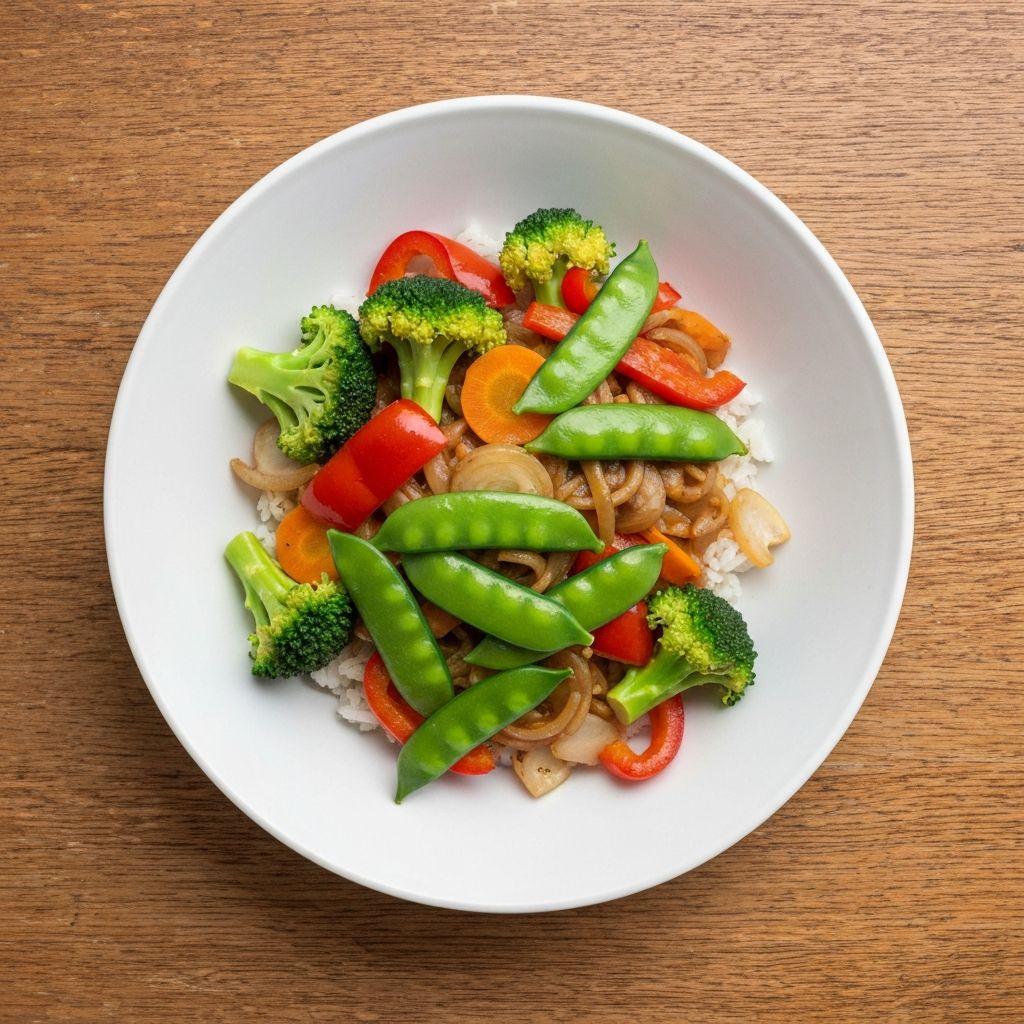
Stir-fries represent a cooking method where vegetable quantity is easily adjusted. A stir-fry with abundant vegetables and a modest amount of protein and oil differs nutritionally from one with minimal vegetables and more protein or oil. Both are valid preparations of the stir-fry concept.
The flexibility of stir-fry preparation means that home cooks naturally create variations with different vegetable content based on what is available and personal preferences.
Volume and Satiety Considerations
Beyond nutritional composition, the volume of vegetables affects the total weight and bulk of a meal. A portion of food that includes substantial vegetables provides more volume for eating compared to the same caloric amount of a denser food. This difference in volume is a factual aspect of food composition.
Flavor and Enjoyment
The palatability and enjoyment of meals with different vegetable content depends on individual taste preferences and eating habits. Some people prefer meals with abundant vegetables; others prefer different proportions. British home cooking reflects diverse preferences in how traditional dishes are prepared.
Preparation Methods for Vegetables
How vegetables are prepared affects their final energy density. Roasted vegetables cooked with oil have higher energy density than steamed or boiled vegetables. Vegetables in cream sauces have higher energy density than the vegetables alone. These are factual differences in how vegetables can be prepared.
Practical Applications
Home cooks frequently adjust vegetable content in dishes based on availability, cost, personal preferences, and what they have on hand. Increasing vegetable content is one way that traditional recipes are naturally varied in home cooking without altering their fundamental character.
Summary
Vegetables have fundamentally different nutritional composition compared to proteins, grains, and fats. Their high water and low energy density means that increasing vegetable content in dishes alters the overall energy density of the meal. This is a factual observation about food composition rather than guidance on how to eat.